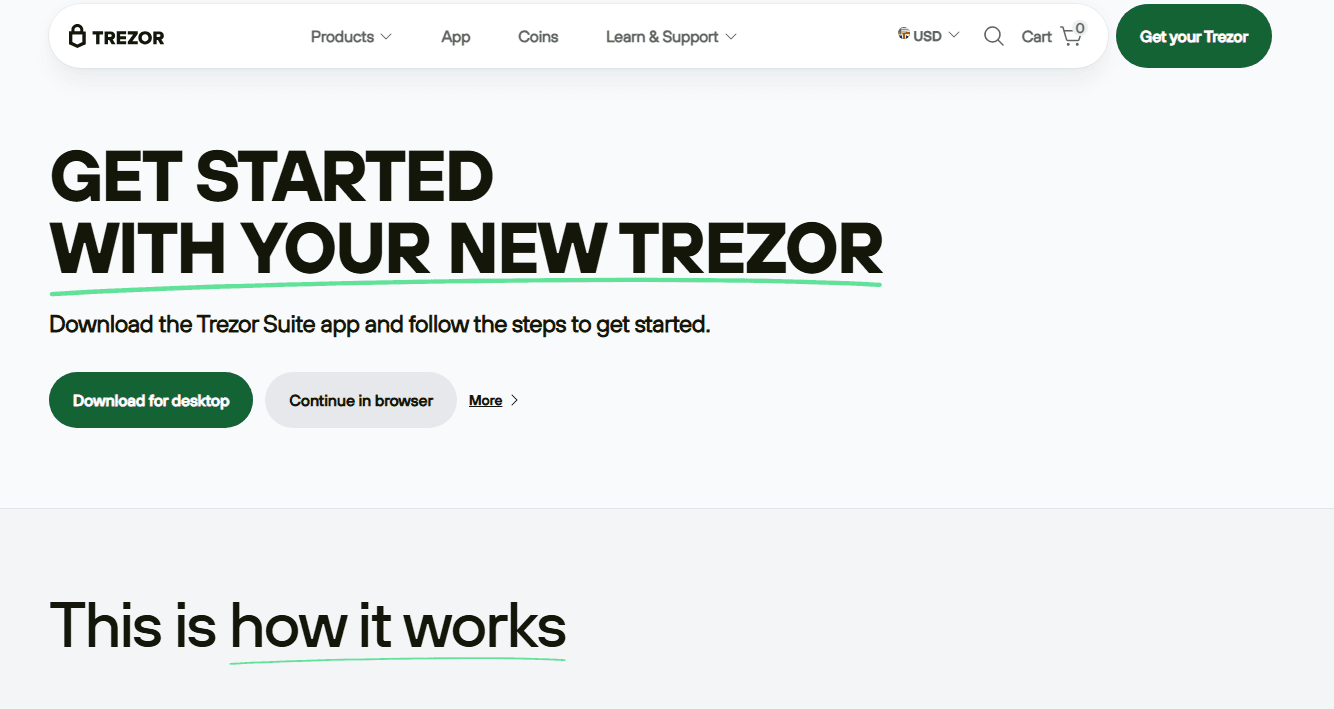
Trezor Login: A Detailed 1200-Word Guide to Securely Accessing Your Hardware Wallet
Logging into a hardware wallet like Trezor is very different from signing into a traditional online account. There are no usernames to remember, no passwords stored on a server, and no cloud-based account that can be hacked. Instead, the Trezor login process is built entirely around your physical device, your PIN, and your recovery information. This unique approach is what makes Trezor one of the most secure ways to protect cryptocurrency.
In this guide, you’ll learn exactly how the Trezor login process works, why it’s designed this way, and what steps you need to follow to safely access and manage your digital assets.
What Does “Trezor Login” Actually Mean?
Most people are used to logging into websites or mobile apps using credentials. Trezor takes a different approach. Instead of having an online account, you access your wallet by unlocking your hardware device. Your private keys never leave the device, meaning nobody—not even Trezor—can log into your wallet without the physical device in hand.
The term “Trezor login” describes a sequence of steps that grant you access to the Trezor Suite interface:
Connecting the device
Unlocking it with your PIN
Entering an optional passphrase
Authorizing access inside Trezor Suite
This process ensures that only the true owner of the device can access or manage the crypto stored in the wallet.
Why Trezor Uses a Hardware-Based Login System
Cryptocurrency needs a level of protection that typical online systems cannot provide. Passwords can be stolen, accounts can be hacked, and cloud data can be compromised. Trezor eliminates these vulnerabilities by ensuring that the secret keys required to access funds never leave the device.
With this system:
Hackers cannot access your wallet remotely.
There is no online database of accounts to attack.
Sensitive data stays offline at all times.
Only the person holding the physical device can initiate login.
This completely changes the meaning of “login.” Instead of entering credentials, you authenticate yourself by proving possession of the hardware wallet and verifying your identity through PIN and passphrase.
Step 1: Connecting the Trezor Device
The login process begins when you plug your Trezor device into your computer or mobile device. Trezor Suite will detect the hardware and begin the initial communication. This step establishes a secure local connection between the software and the device.
When connected:
The Trezor screen activates.
The device displays a prompt asking for verification.
You can confirm that the device is legitimate and not tampered with.
This physical confirmation step is an essential part of the security model because it ensures the user is interacting with a trusted device.
Step 2: Entering the PIN to Unlock the Device
Your PIN is the first level of protection during the login process. The PIN must be entered in Trezor Suite, but the positions of the numbers are scrambled and shown only on the device. This ensures that even if your computer is compromised, the real PIN cannot be extracted.
The PIN system is designed to:
Prevent unauthorized access if somebody steals the device
Reduce the risk of keyloggers or malware capturing entry patterns
Protect the device even if someone tries to guess the code
Each wrong PIN guess increases the delay before another attempt can be made, which makes brute-force attacks nearly impossible. After the correct PIN is entered, the device unlocks and continues to the next step.
Step 3: Using the Optional Passphrase (Hidden Wallet Login)
The passphrase is not required, but many advanced users enable it for an additional layer of security. Unlike the PIN, the passphrase is not stored on the device. You must remember and enter it manually every time you log in.
The passphrase:
Creates a hidden wallet that only appears when the correct phrase is entered
Allows multiple separate wallets to exist on a single device
Protects the seed from physical theft, since the seed alone cannot reveal the hidden wallet
This feature is considered one of the strongest security measures available in a hardware wallet. However, users should be extremely careful because a forgotten passphrase cannot be recovered.
Step 4: Authorizing Access in Trezor Suite
Once the PIN is accepted and the passphrase (if used) is entered, Trezor Suite will display your portfolio. This signals that the login process is complete and that your device has successfully authenticated.
Inside Trezor Suite, you can:
View cryptocurrency balances
Send and receive digital assets
Monitor transaction history
Adjust device and security settings
Connect to various networks or privacy tools
Manage accounts across multiple blockchains
However, even with full access, Trezor requires every transaction to be physically confirmed on the device. This ensures that no software, malware, or malicious actor can send funds without your direct approval.
Why Trezor’s Login Model Is Safer Than Traditional Accounts
The strength of Trezor’s login system comes from its decentralized, device-based security model. There are no remote servers, no accounts stored online, and no single point of failure.
1. No Online Passwords
Your security isn’t dependent on an email, username, or password. Since nothing is stored online, hackers cannot break into an account that doesn’t exist.
2. PIN Security
The PIN system uses randomized patterns and strict cooldown rules that prevent unauthorized guessing.
3. Mandatory Physical Confirmation
Every critical action must be verified on the device screen, which prevents unauthorized transfers even if malware is present.
4. Offline Private Keys
Your private keys never leave the Trezor device, even during login or transaction approval.
5. Recovery Seed Backup
The recovery seed ensures that you can restore your wallet even if the device is lost, damaged, or stolen.
6. Passphrase Protection
Advanced users can create multiple hidden wallets accessible only through unique passphrases.
This layered model makes the Trezor login process one of the strongest forms of crypto authentication available.
Common Issues During Trezor Login and How to Handle Them
Even though Trezor’s login system is highly reliable, users may occasionally face certain issues. Understanding these helps avoid unnecessary stress.
Device Not Responding
This usually occurs due to:
Damaged or incompatible USB cables
Faulty ports
Outdated software or firmware
Trying a new cable or port often solves this quickly.
Incorrect PIN
If you enter a wrong PIN too many times, the device imposes increasing delays. If you forget the PIN entirely, the only solution is to reset the device and restore it using the recovery seed.
Passphrase Mistypes
Since the passphrase must match perfectly, typing mistakes will lead you to the wrong (or empty) wallet. Always double-check your input.
Firmware Update Required
During login, the device may ask for a firmware update before continuing. Keeping firmware up to date ensures maximum security and compatibility.
Best Practices for Smooth and Secure Logins
To ensure your Trezor login experience is always safe, follow these habits:
Keep your device in a secure location.
Use a PIN that isn’t easy to guess.
Never store your recovery seed digitally.
Regularly update your device firmware.
Use the passphrase feature only if you can remember it reliably.
Avoid entering private information on unfamiliar computers.
Practicing safe device handling is just as important as understanding the login process itself.
Conclusion
The Trezor login process is designed to combine convenience with unmatched security. Instead of relying on traditional online credentials, Trezor uses physical authentication, PIN protection, optional passphrases, and full user control. This ensures that only the true device owner can access the wallet and authorize transactions.
By understanding how this system works and following best practices, you can enjoy a safe, smooth, and secure experience every time you log into your Trezor wallet. Whether you are new to crypto or managing a large portfolio, mastering the Trezor login process is essential for protecting your digital assets.